Editable Recipe Book Template: A Guide to Culinary Publishing
For food bloggers, chefs, and culinary entrepreneurs, the leap from a collection of digital notes to a tangible book is significant. The challenge isn't just the recipes themselves, but creating a cohesive, professional layout that does the food justice. An editable recipe book template provides the foundational design assets to bridge that gap, offering a structured yet flexible framework for your cookbook project. It’s about more than just a pretty layout; it’s a tool for building a recognizable brand identity in the culinary space.
The Anatomy of a Professional Cookbook Layout
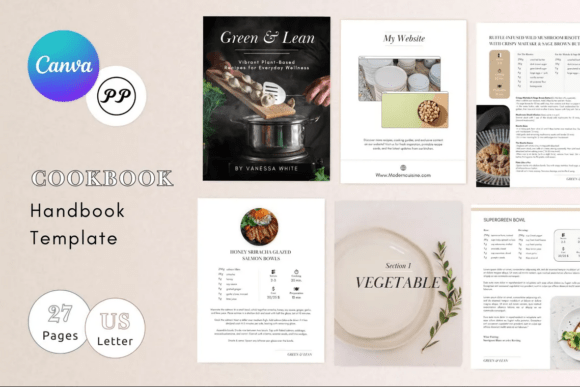
A well-designed cookbook template, like the one described here, functions as a complete editorial design system. Its visual personality is one of organized elegance—clean lines, ample white space, and thoughtful typography create a sense of calm and clarity. This is crucial because a recipe page must be supremely functional. The style balances modern minimalism with warm, inviting elements, using photo frames & styled placeholders to guide the user toward a polished, magazine-quality result without starting from zero.
The appeal lies in its versatility across multiple themes (Modern, Rustic, Minimalist, & More!). This isn't a one-size-fits-all file. A rustic theme with textured backgrounds and serif fonts suits a homestyle baking blog, while a minimalist layout with sans serif typography aligns with a health-focused brand. This adaptability makes it a powerful commercial font companion—here, the "font" refers to the entire templated design language, not just a typeface. You're adopting a pre-built visual hierarchy that ensures headings, ingredients, and instructions are instantly distinguishable.
Practical Applications Beyond the Home Kitchen
The value of an editable recipe book template extends far beyond personal use. For entrepreneurs and small business owners, it’s a launchpad. A specialty food brand can use it to create a beautiful product booklet, bundling recipes that feature their ingredients. A cooking class instructor can design a take-home guide for students. The multiple themes allow you to match the template to your existing marketing materials, ensuring brand consistency from your website to your printed handouts.
Digital creators will find it indispensable for social media graphics and lead magnets. Export a single, stunning recipe page as a PDF to offer as a free download, or use the meal planner page as a content pillar on Instagram. The included "About me" pages and "Follow me on social media" promo page are strategic additions, turning a simple recipe collection into a tool for audience growth and community building. It transforms your content into a tangible asset that enhances perceived value and professionalism.
Maximizing Your Template: A Strategic Approach
To get the most from this resource, think like a designer and a publisher. First, evaluate the 9 Recipe Page Layouts. Do they accommodate your writing style? Some may feature more prominent photo placeholders, others might emphasize detailed instructions. Test them with a few of your most complex and simplest recipes. The goal is to ensure the readability of the text remains high, even when filled with your content.
Next, consider font pairing. While the template includes suggested typography, Canva’s editability allows you to harmonize it with your brand’s existing fonts. Use the section dividers and quote page to inject personality—perhaps a handwritten font for quotes or a script font for chapter titles to add a personal touch against the clean body text. This interplay of a serif font for headings and a sans serif font for instructions is a classic pairing that ensures both elegance and legibility.
Finally, plan the structure. The table of contents and glossary page are not afterthoughts; they are essential for user experience, especially in a printed book. Use the "Special thanks to" page to acknowledge collaborators, creating a professional and heartfelt tone. By methodically customizing each section—from the book covers to the credits page—you move beyond using a template to truly owning it, creating a unique publication that serves as a cornerstone of your creative or commercial endeavor. This is where a simple design file becomes a powerful piece of your brand identity.